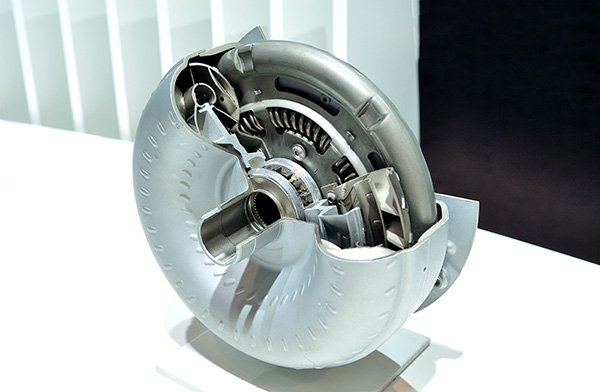
A torque converter is one of those parts most drivers never think about until the transmission starts acting strangely. The car hesitates from a stop, the RPM rises before the vehicle catches up, or there is a shudder at steady speed that feels like driving over rough pavement for a second.
The torque converter is not the part that physically selects each gear.
Its job is to transfer engine power into the automatic transmission and help the vehicle move from a stop without stalling. When it works correctly, gear changes feel controlled and natural. When it starts having problems, the whole transmission can feel confused.
What The Torque Converter Actually Does
In a manual transmission, the clutch connects and disconnects the engine from the transmission. In many automatic transmissions, the torque converter handles that job differently. It uses transmission fluid to transfer engine power into the transmission.
Inside the converter are parts that move fluid in a controlled pattern. The engine drives the impeller. The turbine sends power toward the transmission. The stator redirects fluid to increase torque during vehicle startup.
That fluid connection lets the engine keep running while the car is stopped in gear. Without it, the engine would stall every time you came to a stoplight.
How It Helps The Car Move From A Stop
When you press the gas from a stop, the engine spins the impeller inside the torque converter. That movement pushes transmission fluid against the turbine. The turbine then begins to turn and sends power into the transmission.
At low speeds, the torque converter can multiply torque. That gives the vehicle extra help when starting from a stop, pulling away on a hill, or moving under load. Once the car is moving, the converter does less multiplying and more power transfer.
That is why a failing torque converter may first show symptoms during takeoff. You may feel hesitation, weak acceleration, slipping, or a strange RPM spike before the vehicle starts moving the way it should.
So, How Do Gears Shift?
The actual gear changes happen inside the transmission. Clutches, bands, gears, solenoids, the valve body, and the transmission control module all work together to select the right gear. The torque converter supports that process by transferring engine power into the transmission.
Think of it this way: the torque converter gets power into the transmission, while the transmission decides which gear to use. If the converter is not transferring power correctly, the shifts can feel wrong even if the gear sets are still able to move.
That is why torque converter problems can be mistaken for general transmission failure. The symptoms overlap, and the system has to be tested before anyone calls for repair.
What The Lockup Clutch Does
Many torque converters have a lockup clutch inside. At certain speeds, this clutch creates a more direct connection between the engine and transmission. That helps reduce heat, improve fuel economy, and prevent wasted energy through fluid movement.
When the lockup clutch applies and releases correctly, most drivers do not notice it. When it chatters, slips, sticks, or applies at the wrong time, the vehicle may shudder, surge, or feel like it is lightly misfiring at cruising speed.
That shudder is a common clue. It may happen at around the same speed each time, often under light throttle. It can feel like the transmission cannot decide what to do, when the real issue may be the converter clutch or the fluid control around it.
Old Fluid Can Make Converter Problems Worse
Transmission fluid is a major part of the torque converter operation. It transfers power, carries heat away, applies hydraulic pressure, and helps internal parts respond correctly. If the fluid is old, burnt, low, contaminated, or the wrong type, converter performance can suffer.
A low fluid level can cause slipping, delayed engagement, or overheating. Old fluid can contribute to shudder or harsh behavior. A burnt fluid smell is a sign that heat has already been part of the story.
Regular maintenance helps because the fluid condition gives useful information before a small complaint becomes a larger transmission repair. A service visit can also catch leaks, damaged lines, worn mounts, and stored transmission codes.
Warning Signs Of Torque Converter Trouble
Torque converter issues do not always feel the same in every vehicle. Some drivers notice slipping from a stop. Others notice shuddering at highway speed. Some feel a delay in engagement when shifting into drive or reverse.
Other warning signs can include overheating transmission fluid, poor acceleration, RPM changes that do not match vehicle speed, vibration under light throttle, or a transmission warning light. These symptoms can also be caused by internal transmission wear, solenoid faults, engine misfires, or driveline problems.
That is why an inspection should not focus solely on the converter. The whole system needs to be checked so the repair matches the cause.
Get Torque Converter And Transmission Service In Urbandale, IA, With Premier Automotive Service
If your automatic transmission hesitates, shudders, slips, overheats, or feels different during acceleration, Premier Automotive Service in Urbandale, IA, can check the torque converter, fluid condition, transmission data, and related parts.
Schedule a visit and find out whether the problem starts in the torque converter or another part of the transmission system.