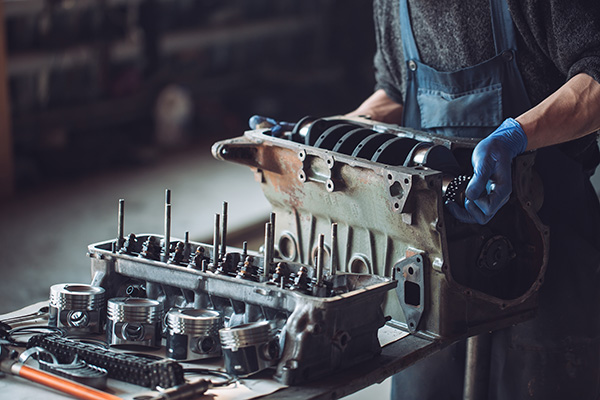
An engine failure does not always mean the vehicle’s story is over. Sometimes a focused repair brings thousands of reliable miles. Other times, the practical move is a full replacement. This guide lays out how to compare your options with real-world costs, risks, and long-term value in mind.
First, Confirm You Have an Engine Problem
Before weighing big decisions, make sure the core issue is truly internal. Low power, misfires, or overheating can come from fuel, ignition, exhaust restriction, or cooling faults that are far cheaper than opening the engine. A compression and leak-down test, an oil pressure test, and a cooling system pressure test separate an internal failure from an external one quickly.
Our technicians start here, so you are not paying for an engine when a sensor or clogged converter is the real culprit.
Repair vs. Replace: Key Decision Factors
Type of failure
Head gasket seep, minor timing chain noise, or a single-cylinder low compression can be repairable. Spun bearings, a windowed block, or collapsed oil pressure usually point to replacement.
Vehicle condition
Strong transmission, clean body, and healthy suspension favor investing in the powertrain. If the rest of the car needs major work, replacement may not pencil out.
Parts availability
Some engines have updated components that permanently fix known faults. Others have scarce parts that drive repair costs up.
Downtime tolerance
Repairs can be faster for small faults. Replacements can be faster when the engine is widely available.
Budget and total cost of ownership
Consider the next 3 to 5 years, not just this invoice.
When A Repair Makes Practical Sense
Small, contained failures respond well to targeted work. Examples include a head gasket breach caught early, a leaking front or rear main seal, or timing components that rattle but have not jumped.
In these cases, machining a cylinder head, replacing chains, guides, seals, and gaskets, and refreshing coolant and oil can restore quiet, stable operation. We often pair repairs with preventive parts while access is open, which avoids paying the same labor twice later.
Replacement Paths: What You’re Really Choosing
Used (salvage-yard) engine
Lowest upfront cost. Quality depends on mileage, prior maintenance, and storage. Ask for compression numbers if available and expect a short warranty.
Remanufactured engine
Completely torn down, machined, and reassembled to specification with updated parts. Higher cost, stronger warranty, best pick for long-term ownership.
New/crate engine (when offered)
Premium price, limited applications. Excellent for late-model vehicles where a perfect match matters.
Hidden Costs That Belong in the Math
Core charges and shipping: Remanufactured units often include refundable cores; shipping adds both ways.
Install kit items
Motor mounts, hoses, belts, thermostat, spark plugs, fluids, and filters should be budgeted, since old support parts stress a fresh engine.
Machine work and fasteners
Head bolts, torque-to-yield hardware, and machining fees add up on repairs.
Programming and relearns
Many vehicles need software updates, immobilizer pairing, and idle or transmission adaptives set after installation.
“While we’re here” items
Clutch on manuals, water pump behind timing covers, or degraded wiring pigtails that are wise to replace during open access.
How Longevity and Warranty Compare
A quality remanufactured engine with proper break-in and fluids can match or exceed the life you got from the original. Used engines are a roll of the dice unless mileage and service history are documented. Repair longevity tracks the accuracy of the diagnosis.
If a head gasket failed from chronic overheating, the root cause might be a marginal radiator or fan control; fixing the gasket without curing the heat will not last. Our team builds the plan around cause and effect, so the warranty means something.
What To Expect From a Professional Evaluation
Expect measurements, not guesses. A sound plan includes compression and leak-down numbers for each cylinder, oil pressure warm and cold, borescope photos if needed, and scan-tool data for fuel trims and misfire counters. Cooling system results should be documented, along with any signs of bearing material in the oil filter.
With those facts, you will get two clear paths: a parts list for a repair that addresses the failure and its cause, or a replacement quote that includes install kit pieces, programming, fluids, and an honest timeline. We use this approach so you can compare options apples to apples.
How To Decide With Confidence
Look beyond sticker price. Add up the total cost, warranty length, expected remaining life of the vehicle, and downtime. If you plan to keep the car for years and the chassis is solid, a remanufactured engine often provides the best long-term value. If you need a lower upfront bill to bridge a year or two, a targeted repair or a low-mileage used engine can be sensible. We are happy to share photos and test results so you can see exactly why one path serves you better than the other.
Get an Honest Engine Repair or Replacement Plan in Urbandale, IA with Premier Automotive Service
Ready to weigh your options with real numbers and clear timelines? Visit Premier Automotive Service in Urbandale, IA. Our team will test, document, and price both repair and replacement paths, then install with the correct parts, programming, and fluids so the fix holds.
Schedule an evaluation today and choose the path that fits your budget and your plans.